
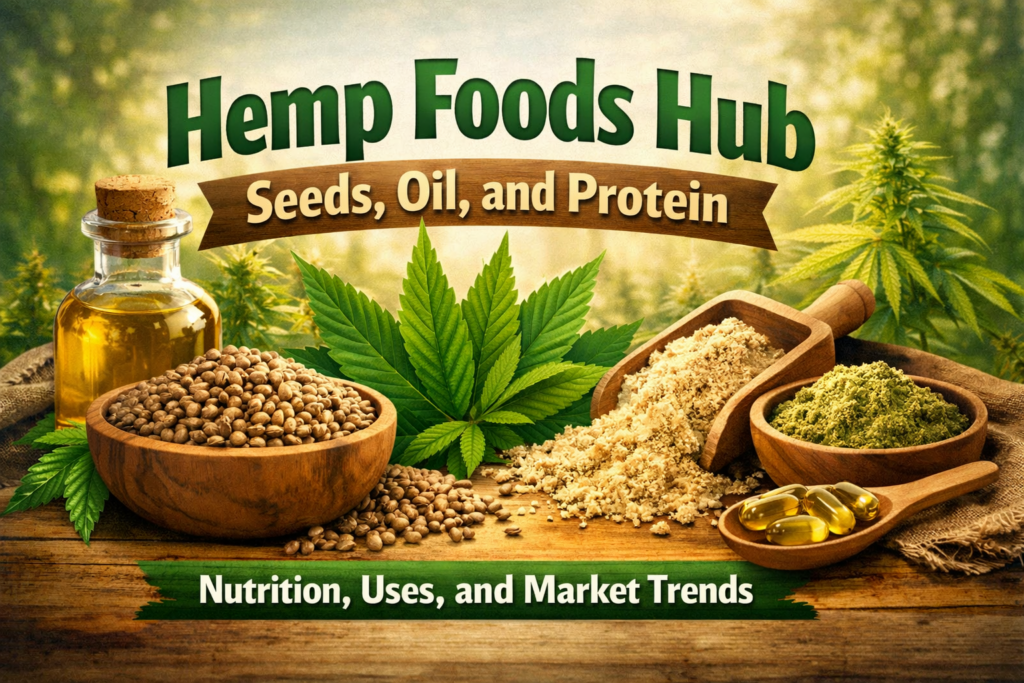
If you’ve seen hemp seeds sprinkled over smoothie bowls, hemp protein in your gym aisle, or hemp seed oil on beauty shelves and wondered whether it’s hype or health, this guide is for you. Hemp foods are quietly earning a place in everyday kitchens because they’re nutrient-dense, versatile, and increasingly available worldwide. Below, we break down what to know—nutrition, benefits, safety, how to use them, and what’s happening in the market across India, the UK, and globally.
What Exactly Are Hemp Foods?
Hemp foods come from varieties of Cannabis sativa L. bred for nutrition, fiber, and low THC (the compound that causes a “high”). The primary edible forms are:
- Whole or hulled hemp seeds (also called hemp hearts)
- Cold-pressed hemp seed oil
- Hemp protein powders (made from pressed or milled seeds)
These products are naturally low in THC and legal in many markets when they meet strict limits. They’re known for a balanced fatty-acid profile, complete plant protein, and useful micronutrients. Hemp seeds and protein are also easy to digest compared to many legumes and grains. medicalnewstoday.com
Why Hemp Is Nutritionally Interesting
Complete protein in a tiny package
- Hemp seeds provide about 25% of calories from protein and contain all nine essential amino acids—rare among plant foods. A 30 g serving of seeds can provide around 9–11 g of protein, similar by weight to some meats. healthline.com fdc.nal.usda.gov
- A typical 31 g serving of hemp protein powder delivers around 12 g protein with fiber and healthy fats intact, making it a less processed alternative to refined isolates. fdc.nal.usda.gov medicalnewstoday.com
Heart-healthy fats, naturally balanced
- Hemp seed oil has an omega-6 to omega-3 ratio close to 3:1, featuring linoleic acid (LA) and alpha-linolenic acid (ALA), plus small amounts of GLA (gamma-linolenic acid). This balance supports cardiovascular health when part of an overall healthy diet. news-medical.net
Micronutrients that actually matter
- Hemp seeds are a source of vitamin E and minerals including magnesium, phosphorus, potassium, iron, and zinc—all helpful for metabolic, immune, and neuromuscular function. fdc.nal.usda.gov healthline.com health.clevelandclinic.org
Digestibility and satiety
- Early studies suggest hemp protein is highly digestible compared to many plant proteins, and the combination of protein, fiber, and healthy fats helps curb hunger. sciencedirect.com health.clevelandclinic.org
Quick Nutrition Snapshot
Table: Typical nutrition for common hemp foods (per common serving)
| Product | Typical Serving | Protein | Fat | Fiber | Notable Nutrients | Use Notes |
|---|---|---|---|---|---|---|
| Hulled hemp seeds | 30 g (2–3 tbsp) | ~9–11 g | ~12–15 g | ~1–2 g | Vitamin E, Mg, Fe, Zn | Sprinkle on bowls, salads, yogurt |
| Hemp seed oil | 1 tbsp (15 ml) | 0 g | ~14 g | 0 g | LA, ALA, GLA | Drizzle cold; don’t high-heat fry |
| Hemp protein powder | 31 g (scoop) | ~12 g | ~11 g | ~8 g (varies) | Polyunsaturated fats | Smoothies, baking, oats |
References: fdc.nal.usda.gov fdc.nal.usda.gov healthline.com
Note: Nutrition varies by cultivar and processing. Always check your product label.
Evidence-Backed Benefits (and What’s Still Emerging)
Here’s what current research and clinical guidance suggest:
- Heart and metabolic markers: Diets higher in polyunsaturated fats like LA and ALA can support healthy cholesterol and blood pressure. Observational and interventional evidence for hemp seed oil is promising, particularly due to LA content and the overall fatty-acid balance. webmd.com news-medical.net
- PMS and menopause symptoms: GLA in hemp seeds may help modulate prostaglandins, which could ease PMS discomfort; some studies on GLA-rich oils show symptom improvements, though hemp-specific trials remain limited. healthline.com
- Skin health: Topical and dietary polyunsaturated fats, including GLA, can support skin barrier and moisturization; hemp oil appears in emollient formulations and is discussed in relation to eczema, dermatitis, and acne-prone skin. Human data are mixed but practical use is common. news-medical.net webmd.com
- Satiety and weight management: Protein and fiber promote fullness and may support weight control when part of a calorie-appropriate diet. Hemp offers both, with less processing than many isolates. health.clevelandclinic.org
Caveats:
- Bold claims about anti-cancer effects of cannabinoids don’t translate directly to hemp seed oil. While CBD shows intriguing lab effects, seeds and seed oil typically contain negligible cannabinoids, and human clinical data are not conclusive. Prioritize a balanced claim: nutrition-forward benefits are better established than disease-treatment claims. news-medical.net
- If you have hypertension and take medication, note that omega-3–rich oils can modestly reduce blood pressure; coordinate with your clinician to avoid over-lowering. webmd.com
How to Use Hemp Seeds, Oil, and Protein
Think of hemp as a “finisher” and a “booster.”
Everyday ideas
- Sprinkle hemp hearts on oatmeal, salads, dal, khichdi, soups, or avocado toast.
- Blend into smoothies with banana, spinach, and yogurt (or plant milk).
- Stir into overnight oats or chia pudding for extra protein and texture.
- Add a scoop of hemp protein to pancakes, rotis/parathas (swap 10–20% of flour), or energy balls.
- Drizzle hemp seed oil over roasted vegetables, raita, hummus, or as a salad dressing base with lemon and mustard.
Kitchen tips
- Hemp seed oil has a low to moderate smoke point; use for dressings or light sautés. For high-heat cooking, choose higher-smoke-point oils and finish with hemp oil.
- Store oil in a cool, dark place; refrigerate after opening to slow oxidation.
- For baking, substitute 10–25% of flour with hemp protein to add fiber and protein. Expect a heartier texture and adjust liquids as hemp protein absorbs moisture.
Safety, Allergens, and Drug Testing
- Allergies: Hemp foods are not common allergens, but seed allergies can occur. Start with small amounts if you’ve had reactions to seeds or nuts. medicalnewstoday.com
- Medication interactions: As with all PUFA-rich oils, consider overall fat balance if you take anticoagulants or antihypertensives—discuss with your clinician. webmd.com
- THC and drug tests: Food-grade hemp seeds, oil, and protein are produced from seed (not resin-rich flower) and generally contain only trace cannabinoids within legal limits. Reputable brands provide certificates of analysis (COAs). If drug testing is critical, choose products with third-party COAs confirming non-detectable THC and stick to serving sizes. medicalnewstoday.com
Market Trends: India, UK, and Global
Hemp foods are moving from niche to mainstream, powered by interest in plant-based protein, functional fats, and clean-label nutrition.
Global snapshot
- The hemp-based foods market is growing steadily, driven by demand for sustainable protein, fortified foods, and dairy alternatives, with North America currently the largest and fastest-growing region. thebusinessresearchcompany.com
- Product innovation is increasing—think hemp-based nut butters, granolas, and protein snacks—targeting both taste and nutrition. thebusinessresearchcompany.com
- Analysts expect strong growth through 2030 as mainstream retail penetration rises and clean-label trends persist. thebusinessresearchcompany.com
UK perspective
- UK consumers are receptive to plant-forward and functional foods; hemp seeds and oils are common in health aisles and online. Brands emphasize organic sourcing, omega balance, and sustainability.
- Innovation in spreads, dairy alternatives, and protein blends aligns with UK interest in natural, minimally processed products. thebusinessresearchcompany.com
India perspective
- India’s regulatory environment has opened pathways for hemp seed foods under food safety guidelines in certain states, aligning with traditional use of oilseeds and growing interest in plant proteins. Availability is expanding via D2C brands and marketplaces.
- Culinary fit is promising: hemp seeds can enrich laddoos, chutneys, rotis, millet blends, and smoothie bowls; hemp oil can finish chaats or salads.
- Consumer education remains key—clarifying that hemp foods are non-intoxicating, legal when compliant, and rich in everyday nutrition.
Note: Regulations vary by country and even region. Always confirm current local policy and labeling norms.
Shopping Smart: What to Look For
- Clear labeling: Look for “hemp seeds/hearts,” “hemp seed oil (cold-pressed),” or “hemp protein powder,” with serving sizes and nutrition facts.
- Third-party testing: Prefer brands that publish COAs confirming low or non-detectable THC and screening for contaminants (heavy metals, microbes).
- Oil freshness: Dark bottles, recent press dates, and refrigeration guidance protect delicate fats.
- Protein style: Hemp protein can be 50–70% protein by weight depending on milling and defatting. Higher protein concentrates taste more neutral but may have less fiber.
SEO Corner: What People Are Searching For
If you’re exploring hemp products online, you’ll notice trends around:
- “Hemp hearts benefits,” “hemp protein vs whey/pea,” “hemp oil omega 3,” “hemp oil for skin,” “best organic hemp seeds,” “cold-pressed hemp oil,” “hemp protein smoothie,” and “hemp seed recipes.”
On major marketplaces, shoppers filter by:
- Organic certification, lab-tested, non-GMO, cold-pressed, raw, and allergen-friendly tags.
These queries reflect what readers want: clarity on nutrition, comparisons to other proteins, skin and heart health angles, and trusted sourcing. health.clevelandclinic.org medicalnewstoday.com
Hemp vs. Other Plant Proteins
- Soy: Higher protein per scoop and complete amino acid profile; may be more processed (isolates) and a common allergen.
- Pea: Strong protein content and widely tolerated; pairs well with rice protein for a complete profile.
- Hemp: Complete protein with fiber and healthy fats intact; generally easier on digestion and minimally processed, though protein per scoop is modest.
If your goal is maximum protein per calorie, pea or soy isolates win. If you want a whole-food protein with fiber and PUFAs, hemp is a smart pick. medicalnewstoday.com
Practical 7‑Day “Hemp In Your Meals” Ideas
- Day 1: Add 2 tbsp hemp hearts to your morning porridge; drizzle hemp oil over a lentil salad.
- Day 2: Smoothie with banana, spinach, cacao, and a scoop of hemp protein.
- Day 3: Sprinkle hemp seeds on curd or plant yogurt with berries and honey.
- Day 4: Mix hemp hearts into chapati dough (10–15%) for a nutty twist.
- Day 5: Pesto remix: basil, coriander, hemp seeds, lemon, garlic, and hemp oil.
- Day 6: Energy bites with dates, oats, peanut butter, cacao nibs, and hemp hearts.
- Day 7: Roast veg bowl finished with tahini-hemp oil dressing; top with toasted hemp seeds.
Start with 1–2 tbsp seeds or 1 scoop protein daily; adjust based on your energy and protein needs.
The Bottom Line
Hemp seeds, oil, and protein earn their spot as everyday foods: complete plant protein, a favorable omega profile, and useful micronutrients in a minimally processed package. They won’t replace medical treatments or magically transform health, but they fit beautifully into balanced, plant-forward eating—across Indian, British, and global kitchens.
If you value nutrition density, gentle digestibility, and sustainability, hemp belongs on your shortlist.
References
- USDA FoodData Central entries for hemp seeds and hemp protein (nutrient composition). fdc.nal.usda.gov fdc.nal.usda.gov
- Healthline review on hemp seeds’ protein and micronutrients. healthline.com
- MedicalNewsToday overview of hemp protein nutrition and digestibility. medicalnewstoday.com
- Cleveland Clinic article on practical benefits and serving insights. health.clevelandclinic.org
- News‑Medical explainer on hemp oil fatty-acid profile and skin applications. news-medical.net
- WebMD summary on hemp seed oil and cardiovascular markers. webmd.com
- Global market overview and trends in hemp-based foods. thebusinessresearchcompany.com
FAQs
Question: Are hemp seeds legal and will they get me high? Answer: Food-grade hemp seeds, oil, and protein are made from low-THC varieties and contain only trace cannabinoids within legal limits. They are non-intoxicating when produced and labeled to local regulations. Check your region’s rules and choose brands with third-party testing.
- Question: Is hemp protein complete, and how does it compare to whey? Answer: Hemp protein contains all nine essential amino acids and is easy to digest. It typically has less protein per scoop than whey but includes fiber and healthy fats, with minimal processing.
- Question: Can I cook with hemp seed oil? Answer: Use hemp oil for dressings, dips, and finishing dishes. It’s not ideal for high-heat frying due to its delicate polyunsaturated fats and lower smoke point.
- Question: Will hemp foods affect a drug test? Answer: Reputable hemp foods contain only trace THC. If drug testing is a concern, select products with third-party COAs showing non-detectable THC and follow serving sizes.
- Question: How much should I eat daily? Answer: Common servings are 1–3 tbsp hemp seeds, 1 tbsp hemp oil, or 1 scoop hemp protein per day. Adjust based on your calorie and protein needs and discuss with a clinician if you have medical conditions.