
Published on Hemplogy.com — Sustainable Building Insights for Modern India
🌿 Introduction: The New Economics of Green Construction
In 2026, the Indian construction landscape is undergoing a quiet revolution. Builders, architects, and homeowners are shifting from traditional materials toward eco‑friendly, cost‑efficient alternatives. The debate between hempcrete, AAC (Autoclaved Aerated Concrete), and red brick is no longer just about price — it’s about performance, sustainability, and long‑term value.
This comprehensive guide compares these three materials cost per square foot (ft²), their thermal efficiency, durability, and environmental impact, backed by Statista, market reports, and Amazon building material trends.
🏗️ Understanding the Contenders
1. Hempcrete — The Carbon‑Negative Innovator
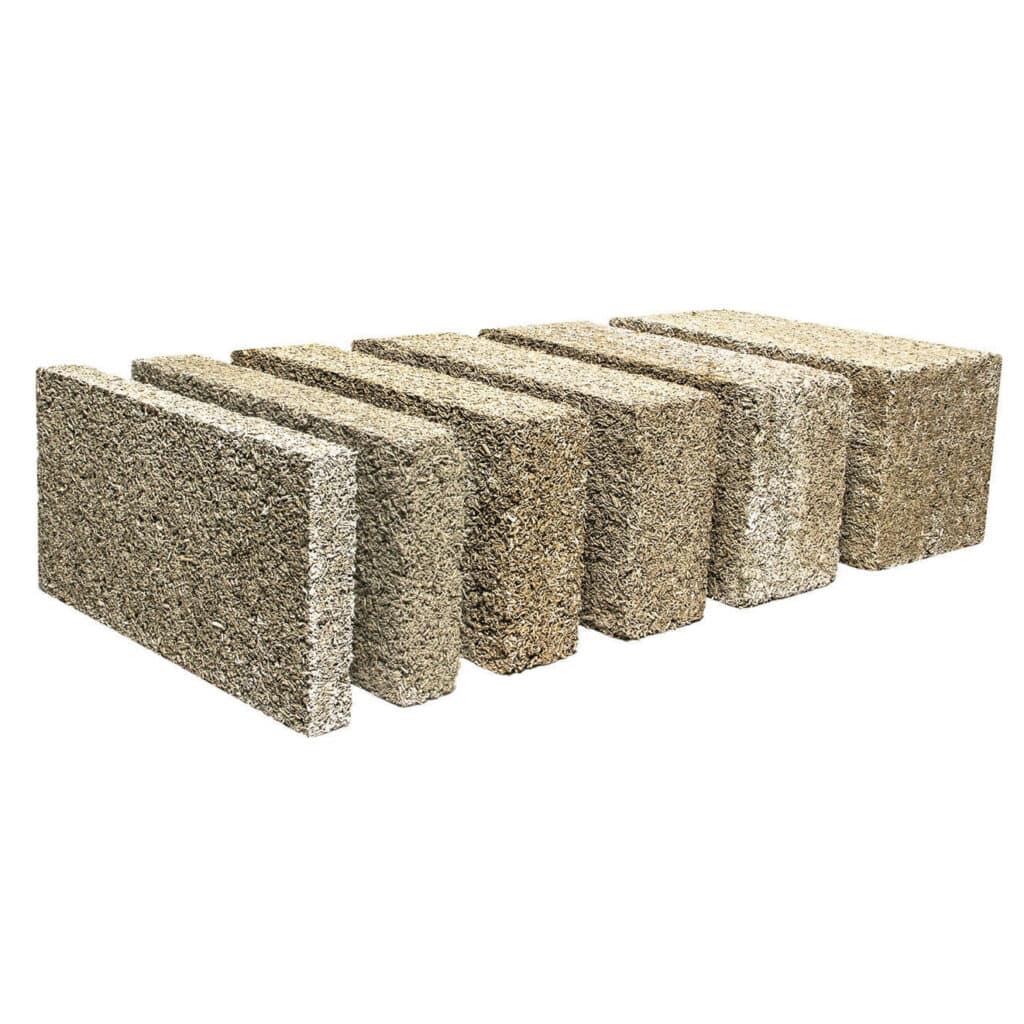
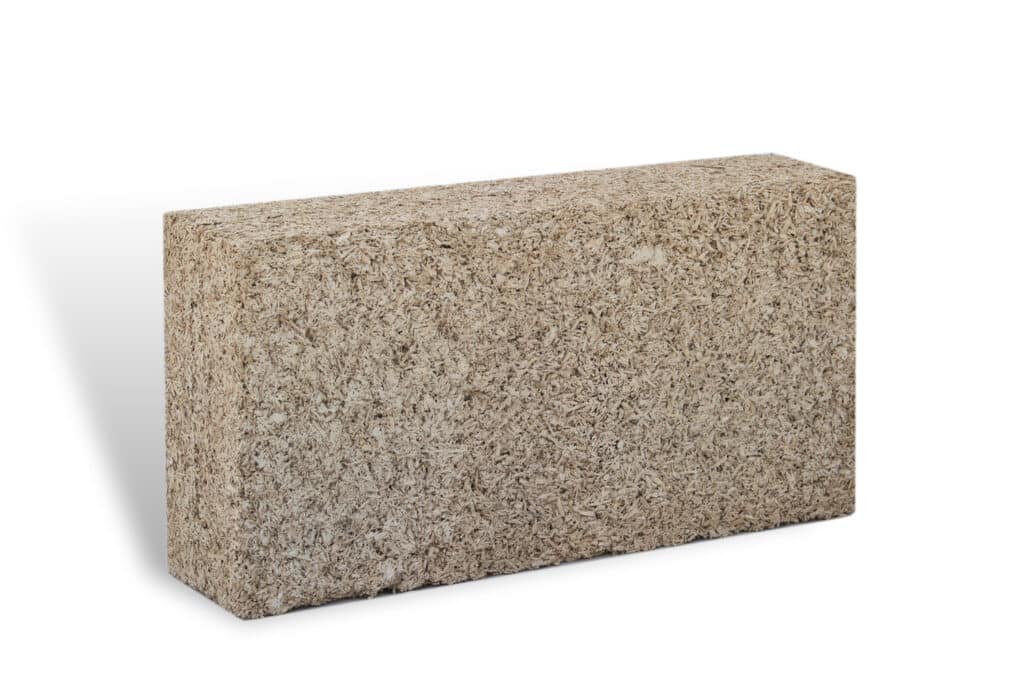
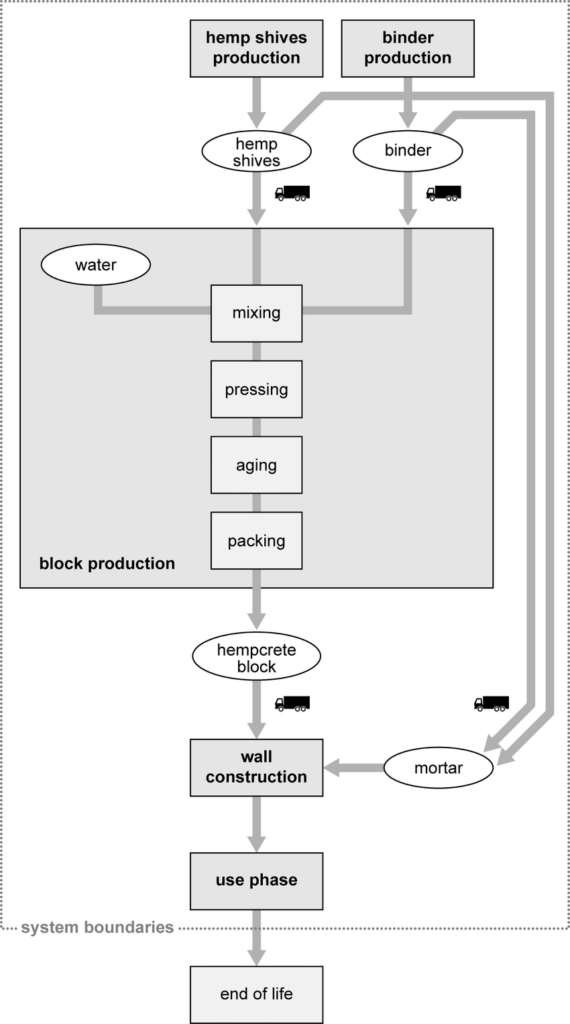
Hempcrete is a bio‑composite made from hemp hurds (shiv), lime, and water. It’s not load‑bearing but serves as an insulating infill within timber or steel frames.
Key Features:
- Carbon‑negative during production
- Excellent thermal and acoustic insulation
- Breathable and mold‑resistant
- Lifespan: 50–100 years
2. AAC Block — The Lightweight Urban Choice
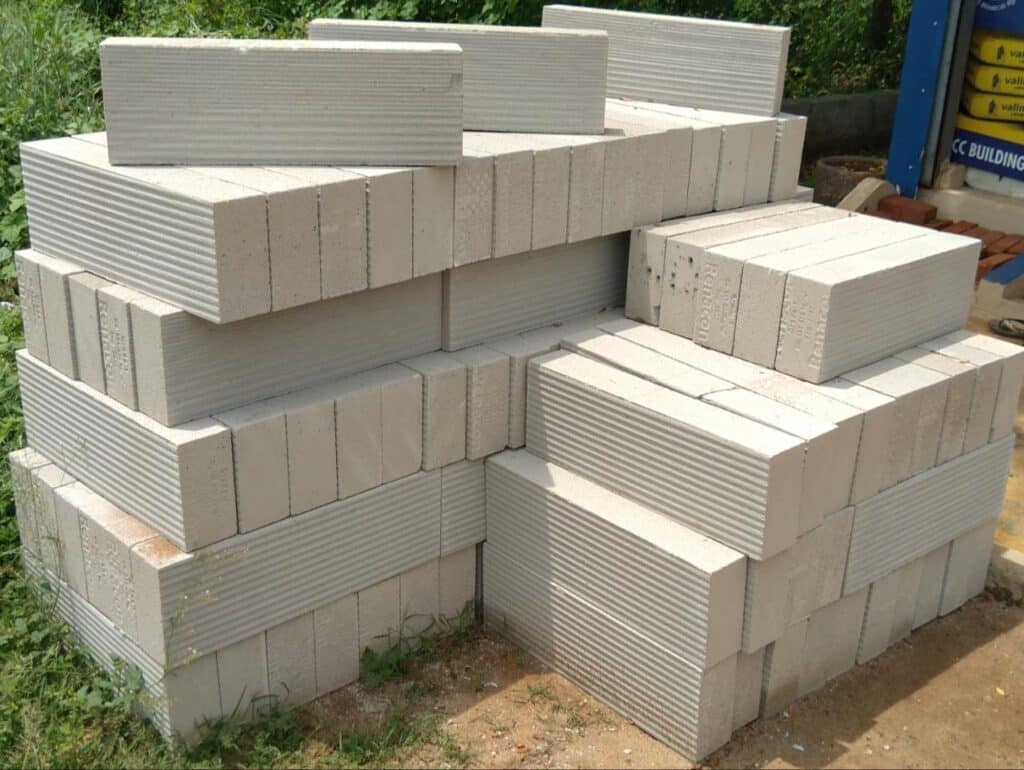
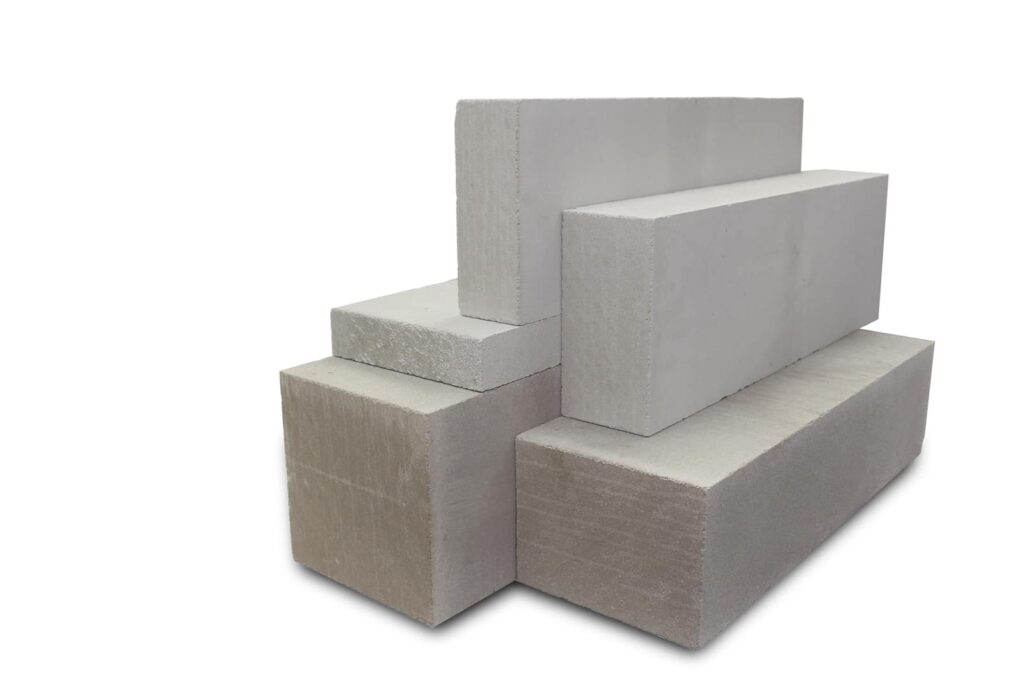
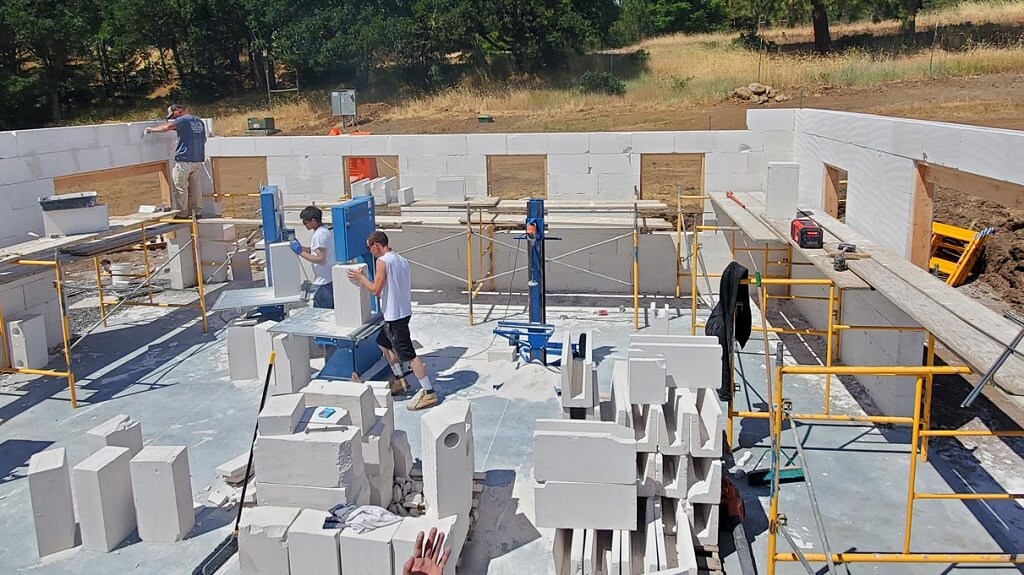
AAC (Autoclaved Aerated Concrete) is a precast foam concrete block made from cement, lime, and aluminum powder. It’s widely used in modern urban housing.
Key Features:
- 60–70% lighter than red brick
- High thermal insulation
- Fire‑resistant and pest‑proof
- Lifespan: 50+ years
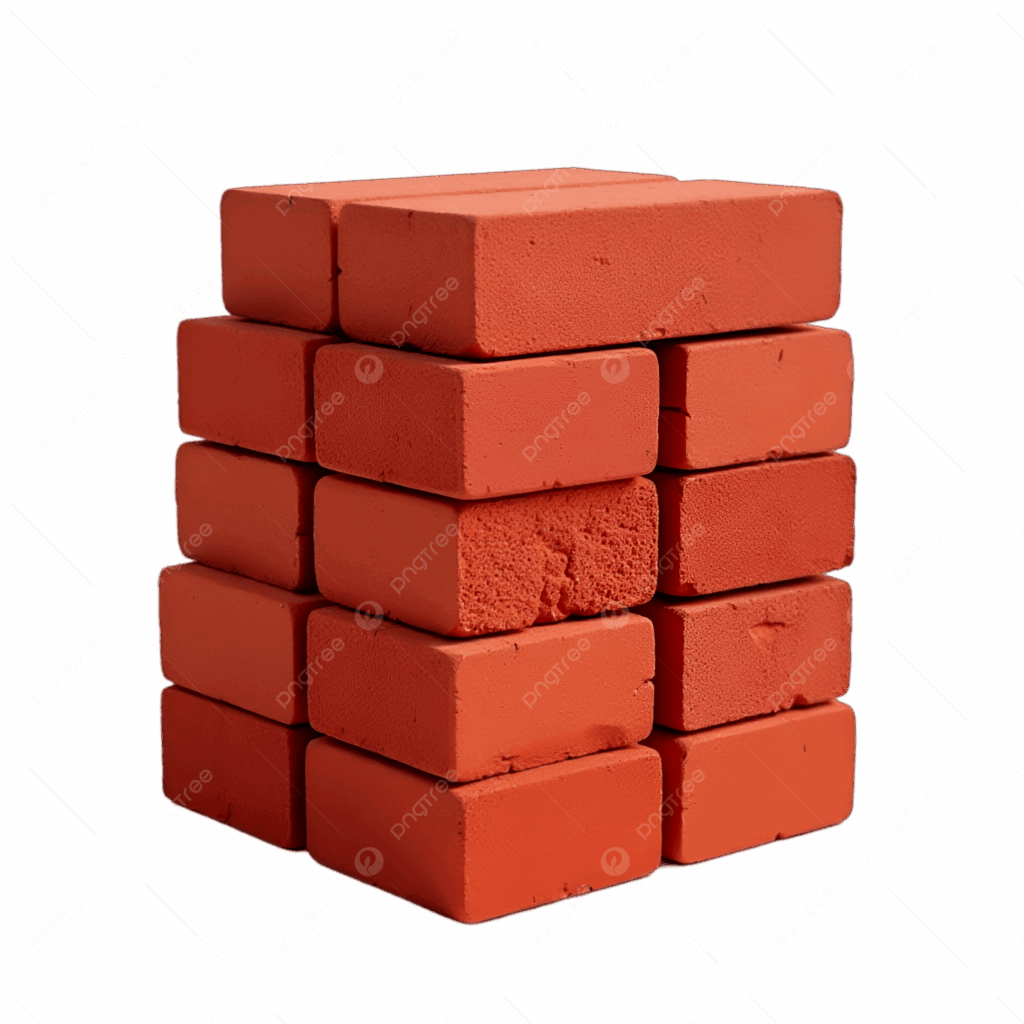
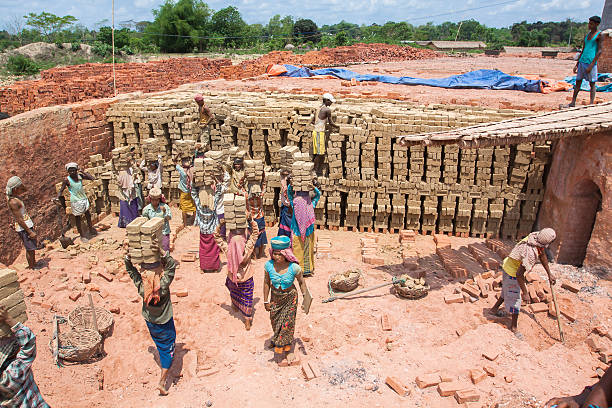
3. Red Brick — The Traditional Workhorse
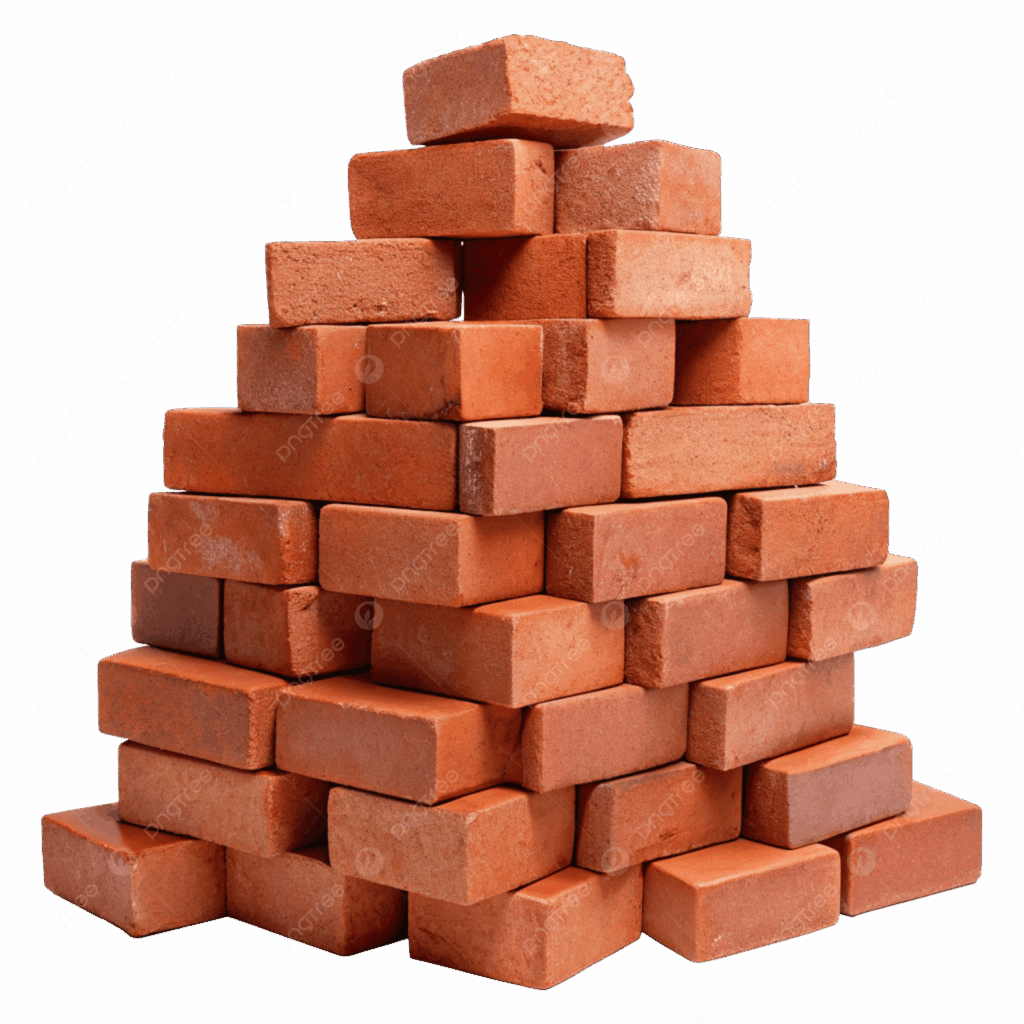
Red clay bricks have been the backbone of Indian construction for centuries. Despite sustainability concerns, they remain popular for their strength and familiarity.
Key Features:
- Readily available and affordable
- Strong compressive strength
- Poor insulation and high embodied energy
- Lifespan: 75+ years
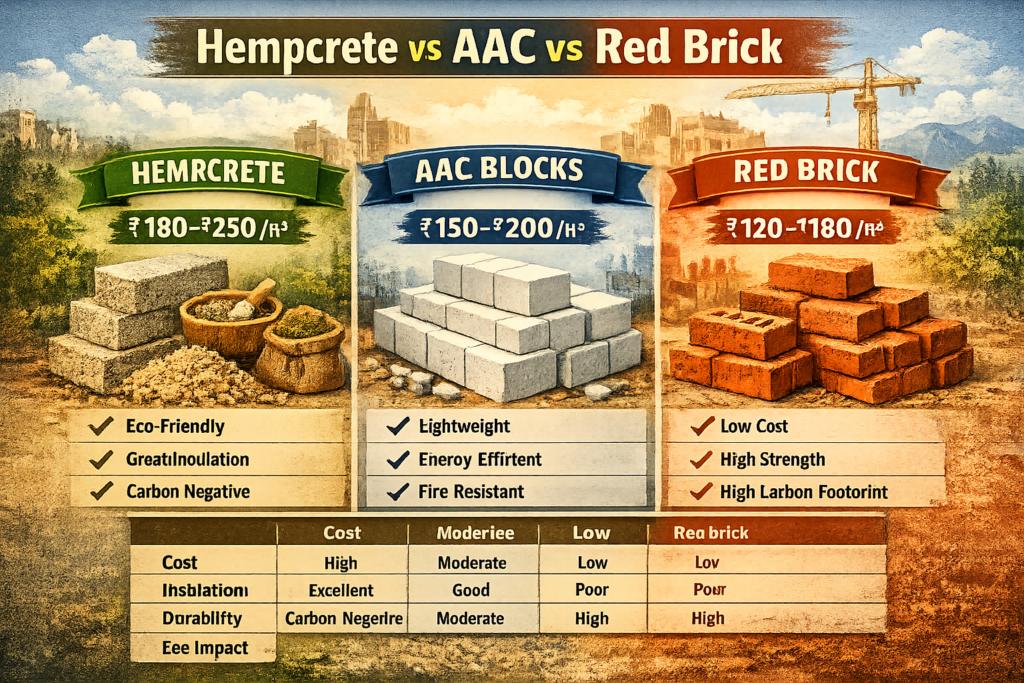
💰 Cost per ft² Comparison (2026 Estimates)
| Material | Average Cost/ft² (India) | Global Average (USD/ft²) | Thermal Efficiency | Durability | Eco Impact |
|---|---|---|---|---|---|
| Hempcrete | ₹180–₹250 | $2.2–$3.0 | Excellent | High | Carbon‑negative |
| AAC Block | ₹150–₹200 | $1.8–$2.5 | Good | High | Moderate |
| Red Brick | ₹120–₹160 | $1.5–$2.0 | Poor | High | High carbon footprint |
(Sources: Statista Construction Materials Report 2026, India Building Trends Survey, Amazon India Building Supplies Data)
🔍 Performance Breakdown
🧱 1. Thermal Insulation
- Hempcrete: R‑value up to 2.5 per inch; reduces cooling costs by 30–40%.
- AAC: Decent insulation but less breathable.
- Red Brick: Retains heat, increasing energy bills in tropical climates.
⚙️ 2. Structural Strength
- Hempcrete: Non‑load‑bearing (~1 MPa).
- AAC: Moderate strength (~3–5 MPa).
- Red Brick: High compressive strength (~7–10 MPa).
🌍 3. Environmental Impact
- Hempcrete: Absorbs up to 165 kg CO₂/m³ during curing.
- AAC: Uses less raw material but requires high‑temperature autoclaving.
- Red Brick: Emits ~0.25 kg CO₂ per brick during firing.
📈 Market Trends (2026)
| Metric | Hempcrete | AAC Block | Red Brick |
|---|---|---|---|
| CAGR (2024–2026) | 12.4% globally | 7.8% Asia‑Pacific | −3% annually |
| Top Regions | India, UK, EU | India, UAE, Singapore | Rural India |
| Amazon Search Volume | “hempcrete blocks India” | “AAC wall panels” | “eco‑friendly bricks” |
Insight: Hempcrete’s growth is driven by carbon‑neutral mandates and green housing incentives, while AAC remains dominant in urban mid‑range projects.
🌎 Regional Insights
🇮🇳 India
- Hempcrete adoption rising in Himachal Pradesh, Uttarakhand, and Goa.
- AAC dominates urban housing due to cost and availability.
- Red brick remains rural default for low‑budget builds.
🇬🇧 United Kingdom
- Hempcrete used in eco‑housing and retrofits.
- AAC preferred for modular construction.
🌍 Global
- EU carbon‑neutral policies accelerate hempcrete adoption.
- AAC expanding in Middle East and Southeast Asia.
🧮 Cost Breakdown Example (Per 1000 ft² Home)
| Material | Material Cost (₹) | Labor Cost (₹) | Total (₹) | Energy Savings (Annual) |
|---|---|---|---|---|
| Hempcrete | 2,00,000 | 1,00,000 | 3,00,000 | ₹25,000–₹30,000 |
| AAC | 1,80,000 | 80,000 | 2,60,000 | ₹15,000–₹20,000 |
| Red Brick | 1,50,000 | 1,20,000 | 2,70,000 | ₹5,000–₹8,000 |
🧠 Expert Takeaway
If your goal is long‑term sustainability and energy efficiency, hempcrete wins hands‑down. For urban affordability, AAC offers the best balance. Red brick remains viable for low‑budget, high‑strength projects but lags in eco performance.
In short:
- Hempcrete = Future‑proof sustainability
- AAC = Urban practicality
- Red Brick = Traditional reliability
❓ FAQ Schema
Q1: Is hempcrete available in India? Yes, suppliers in Himachal Pradesh, Goa, and Maharashtra offer hempcrete blocks and mixes.
Q2: Can hempcrete replace red brick structurally? No, hempcrete is non‑load‑bearing; it’s used with frames.
Q3: Which material is best for tropical climates? Hempcrete — superior breathability and humidity control.
Q4: Is AAC block waterproof? It’s water‑resistant but requires plastering for full protection.
Q5: Which material has the lowest carbon footprint? Hempcrete — it’s carbon‑negative during production.
📢 Conclusion
The cost per square foot is only part of the story. When you factor in energy savings, durability, and environmental impact, hempcrete emerges as the most future‑ready material for sustainable construction. AAC remains the pragmatic choice for urban developers, while red brick continues to serve traditional builds.
👉 Visit Hemplogy.com for more data‑driven building insights, share this article with your network, and explore our encyclopedia entries on sustainable materials.