
Introduction
The world’s addiction to petroleum has fueled wars, destabilized economies, and accelerated climate destruction. Yet, hidden in plain sight, industrial hemp offers a sustainable alternative: a plant capable of producing high‑yield biodiesel, enriching soil, and reducing carbon emissions. Despite its potential, hemp has been banned, stigmatized, and sidelined — not because of science, but because of politics and profit.
The Global Oil Obsession
- Geopolitical conflicts: From the Gulf Wars to Russia‑Ukraine tensions, oil remains a trigger for global instability.
- Environmental toll: Burning fossil fuels contributes to 75% of global greenhouse gas emissions.
- Economic dependency: Nations spend billions importing oil, while rural communities remain energy‑poor.
This obsession blinds us to alternatives like hemp, which could decentralize energy production and reduce reliance on oil cartels.
Hemp Biodiesel: Science & Research
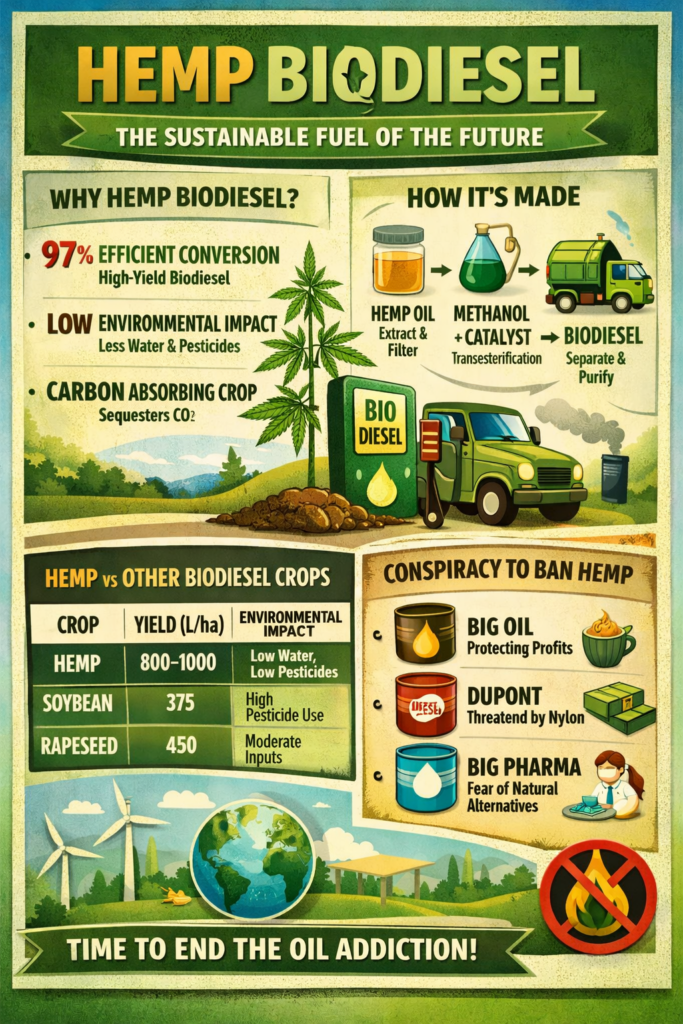
University of Connecticut (2010): Hemp oil converted to biodiesel with 97% efficiency, meeting ASTM standards for fuel quality.
European Biofuel Studies (2018–2022): Hemp yields 800–1000 liters per hectare, outperforming soybean and sunflower.
Carbon sequestration: Hemp absorbs 15 tonnes of CO₂ per hectare annually, offsetting emissions from its fuel use.
How Hemp Biodiesel Is Made
Step‑by‑step formulation (Transesterification):
- Harvest hemp seeds → press to extract oil.
- Filter & dry oil → remove water.
- Mix oil with methanol + NaOH/KOH catalyst.
- Reaction produces Fatty Acid Methyl Esters (FAME) → biodiesel + glycerol.
- Separate biodiesel from glycerol.
- Wash & dry biodiesel → ready for use.
⚠️ Safety note: Methanol is toxic; lye is caustic. Production requires lab‑grade equipment and protective gear.
Why Hemp Was Banned
- 1937 Marihuana Tax Act: Driven by Hearst (timber), DuPont (synthetic nylon), and Standard Oil, hemp was criminalized to protect competing industries.
- 1970 Controlled Substances Act: Nixon’s “War on Drugs” lumped hemp with psychoactive cannabis.
- Modern bans: Recent U.S. restrictions (2025–2026) target hemp products under the guise of THC regulation, but critics argue this is about protecting Big Oil and Big Pharma.
Conspiracy Theories
- Hemp threatened DuPont’s nylon patents.
- Oil companies feared localized biodiesel production undermining centralized oil profits.
- Pharmaceutical giants opposed hemp’s dual role in medicine + energy.
Use Cases of Hemp Biodiesel
- Transportation fuel: Works in standard diesel engines.
- Rural empowerment: Farmers can grow hemp and produce local fuel.
- Carbon neutrality: Hemp absorbs CO₂ during growth.
- Byproducts: Glycerol for soaps, lubricants, and pharmaceuticals.
Videos Worth Watching
Here are some engaging YouTube resources:
- Better Than Gasoline. Why Was Hemp Banned Twice?
- Putting Hemp Seed Oil in a Diesel Engine
- What Goes Into Making Biofuels?
Hemp vs Other Biodiesel Crops
| Feedstock | Yield (L/ha) | Conversion Efficiency | Environmental Impact |
|---|---|---|---|
| Hemp | 800–1000 | 97% | Low water, low pesticide |
| Soybean | ~375 | 90% | High pesticide, soil depletion |
| Rapeseed | ~450 | 92% | Moderate inputs |
| Waste oil | Variable | 85–95% | Recycling benefit |
FAQs
Is hemp biodiesel legal? Laws vary; in many countries hemp cultivation is restricted despite its non‑psychoactive nature.
Can hemp biodiesel replace petroleum? It can supplement and reduce dependence, but scaling requires policy change.
Why don’t we use hemp fuel already? Industrial lobbying, outdated laws, and stigma around cannabis.
Conclusion
Hemp biodiesel is not just a fuel — it’s a political statement against oil dependency, environmental destruction, and corporate monopolies. With science proving its efficiency and sustainability, the question is no longer can hemp replace oil? but why haven’t we allowed it to?
Unlocking hemp’s potential could reduce wars over oil, empower farmers, and help us transition to a greener future.