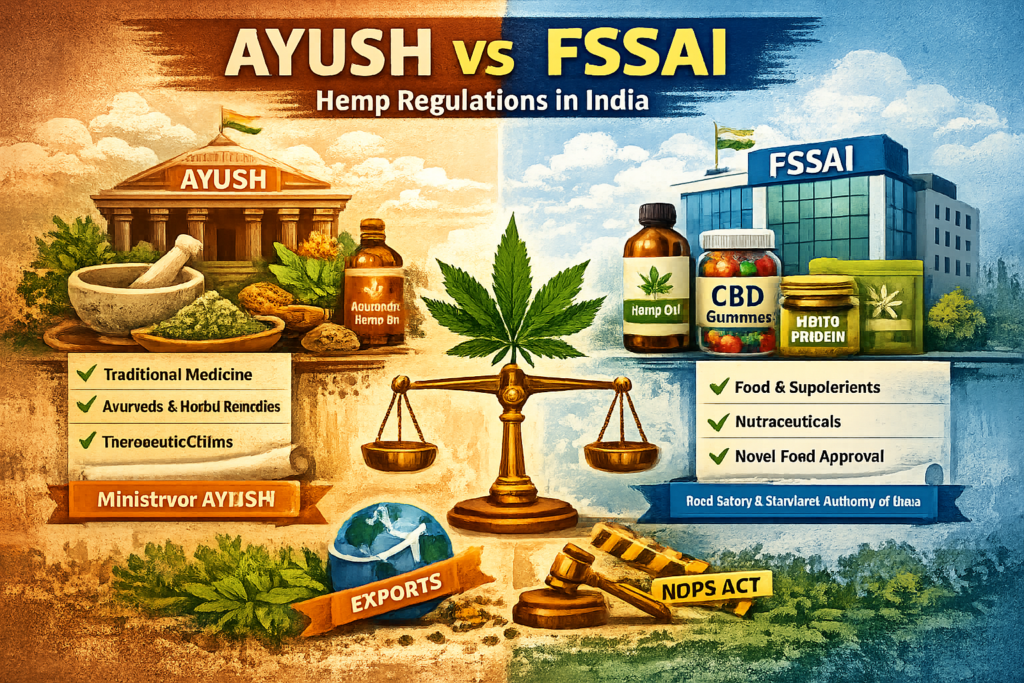
AYUSH vs FSSAI is one of the most critical regulatory crossroads for hemp, CBD, nutraceuticals, and herbal wellness products in India today. In 2026, the distinction determines whether your product is treated as a “food supplement” under FSSAI or as a “traditional medicine” under AYUSH — with direct implications for licensing, compliance, and market access.
Introduction
India’s hemp and CBD industry is expanding rapidly, but regulatory clarity remains fragmented. Entrepreneurs, importers, and wellness brands often struggle to decide: Should my product go under FSSAI or AYUSH? This blog breaks down the differences, market trends, and global context to help Hemplogy readers navigate compliance.
FSSAI: Food & Nutraceutical Route
Key Features
- Regulator: Food Safety and Standards Authority of India (FSSAI)
- Scope: Foods, beverages, nutraceuticals, health supplements, functional foods
- Licensing: FoSCoS system, typically valid for 1–5 years
- Ingredient Approval: Must be listed in schedules or approved as “novel food”
- CBD Challenge: CBD is not explicitly permitted as a food ingredient; requires novel food approval
Pros
- Easier entry for protein powders, hemp seeds, hemp oil
- Stronger alignment with Amazon bestsellers (CBD gummies, hemp protein)
- International credibility for exports
Cons
- Ingredient restrictions (CBD, cannabinoids)
- Heavy compliance audits for imports
AYUSH: Traditional Medicine Route
Key Features
- Regulator: Ministry of AYUSH
- Scope: Ayurveda, Yoga, Unani, Siddha, Homoeopathy (ASU drugs)
- Licensing: State-level AYUSH authorities under Drugs & Cosmetics Act
- Positioning: Products must fit therapeutic claims with permitted plant parts
Pros
- Easier acceptance for herbal formulations and Ayurvedic hemp remedies
- Strong domestic market appeal (India’s herbal wellness boom)
- Leverages India’s cultural heritage
Cons
- Requires therapeutic positioning (not “general wellness”)
- Limited global acceptance compared to FSSAI
📊 Comparison Table
| Aspect | FSSAI | AYUSH |
|---|---|---|
| Regulator | Food Safety and Standards Authority of India | Ministry of AYUSH |
| Product Type | Foods, supplements, nutraceuticals | ASU drugs, herbal remedies |
| Licensing | FoSCoS, 1–5 years | State AYUSH authorities |
| CBD/Hemp | Restricted, novel food approval needed | Allowed if framed as Ayurvedic |
| Market Fit | Amazon bestsellers, global exports | Domestic herbal wellness |
| Risk | Ingredient bans, import audits | NDPS Act sensitivities |
🌍 Global & Regional Insights
- India: Hemp seeds/oils fit FSSAI; CBD wellness often routed via AYUSH.
- UK: CBD supplements regulated as “novel foods.”
- US: FDA treats CBD as restricted in food but allowed in cosmetics.
- Amazon Trends: CBD gummies, hemp protein powders, organic hemp supplements India dominate searches.
Q1: Is CBD legal under FSSAI in India? CBD is not explicitly permitted as a food ingredient; requires novel food approval.
Q2: Can hemp oil be sold under AYUSH? Yes, if positioned as Ayurvedic medicine with therapeutic claims.
Q3: Which route is better for exports? FSSAI licensing aligns better with international food standards.
Q4: Does NDPS Act affect hemp products? Yes, narcotics law applies if THC levels exceed permissible limits.
Q5: What products fit FSSAI vs AYUSH?
- FSSAI: Hemp protein, hemp seeds, hemp oil (food use)
- AYUSH: Ayurvedic hemp remedies, herbal tinctures
Navigating AYUSH vs FSSAI is not just a compliance decision — it defines your brand’s market positioning. For hemp entrepreneurs, the safest path is to map products carefully: foods under FSSAI, remedies under AYUSH.
👉 Visit Hemplogy for more encyclopedia entries, share this article with your network, and explore our cornerstone guides on hemp regulation.