
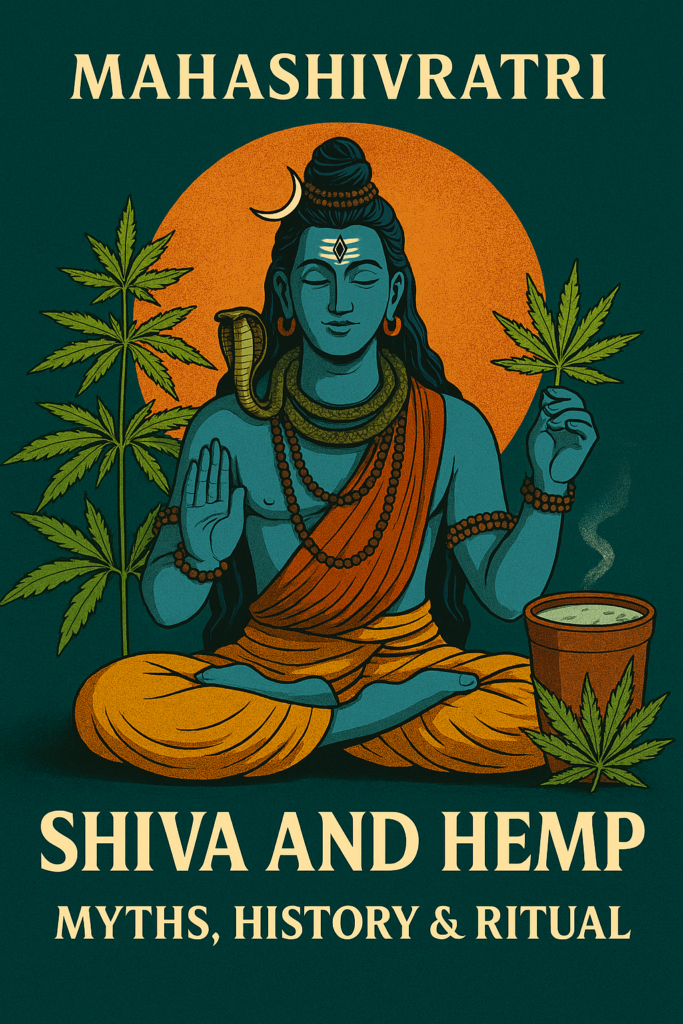
I’ve often felt frustrated by the blind association of cannabis with Lord Shiva, especially when some people justify excessive hashish use in his name. The truth is, these behaviors are far removed from the essence of the Adi Yogi. What bothers me most is when stoners convince others to smoke by calling it Shiva’s prasad.
In this blog, my aim is to clear up these myths and guide the youth toward a more responsible understanding. Blind association and reckless consumption don’t honor Shiva — they only harm your health. Cannabis has a rich cultural and medicinal history, but misusing it under the guise of devotion distorts both the plant’s value and the spiritual legacy of Shiva.
Let’s be honest. Every year around Mahashivratri, a specific segment of the population gets very excited. And no, it’s not just because they plan to chant “Om Namah Shivaya” all night. It’s because Shivratri is the one day when society looks the other way while people consume a neon-green, milk-based concoction that makes them feel like they’re floating on a Himalayan cloud.
We’re talking about Bhang — the flower of the Cannabis Sativa (hemp) plant.
But before you assume Mahashivratri is the “Burning Man” of ancient India, let’s clear the smoke. There’s a deep, mystical, and often misunderstood connection between Lord Shiva and this versatile plant. From ancient Hindu Vedas to Sikh warrior traditions, hemp’s spiritual role is far more nuanced than a simple “get high” pass.
Why Do We Celebrate Mahashivratri? (Beyond the Thandai)
“Shivratri” refers to the monthly night dedicated to Shiva. Mahashivratri is its grandest version — the spiritual Super Bowl.
Several legends explain why we stay awake on this night. Some say it marks Shiva’s cosmic dance, the Tandava. Others celebrate it as the divine wedding of Shiva and Shakti — the union of consciousness and energy.
But the most intense story involves the Samudra Manthan. During this cosmic churn, gods and demons sought the nectar of immortality. Instead, they produced a deadly poison called Halahala. Shiva drank it to save the universe. His throat turned blue (hence Neelkanth), and he had to stay awake to process the toxicity.
To cool him down, the gods offered water, milk — and herbs.
Shiva and the Hemp Flower: A Match Made in Kailash
So why is Shiva often pictured looking serene, surrounded by hemp leaves?
The Ultimate Coolant
In Ayurveda, hemp is considered “Ushna” (hot) in potency. Yet it’s used in specific preparations to pacify heat — especially the kind generated by intense meditation or cosmic poison. Offering Bhang or Datura to Shiva is symbolic. Devotees present the bitter or intoxicating parts of nature, trusting Shiva to transmute them into peace.
The Master of All States
Shiva is Vishweshwara — Lord of the Universe. He embodies all states: beautiful and ugly, sober and intoxicated. His association with hemp shows that he transcends dualities. He’s the patron of outcasts, rebels, and wandering ascetics who renounce worldly comforts.
Focus, Not Fog
Let’s bust the first big myth: Shiva wasn’t a stoner. In yogic tradition, he’s the Adi Yogi — the embodiment of alertness. While modern recreational use leads to couch-lock, yogis used hemp to still the mind for deep meditation. It wasn’t about escaping reality. It was about piercing through the illusion of it.
Hemp in the Holy Texts: Hinduism and Sikhism
Wait, is hemp actually in the scriptures, or did someone just write that on a Reddit thread? Let’s look at the receipts.
In Hindu Texts: The Food of the Gods
The Atharva Veda (written roughly between 1500–1000 BCE) lists Bhanga as one of the five most sacred plants on Earth. It calls it a “liberator” and a “source of happiness” that was given to humans to help them attain freedom from fear and anxiety.
In the Puranas, hemp is often referred to as Vijaya (The Victorious One). It was believed to have emerged from the ocean during the Samudra Manthan, a gift from the divine to help humanity cope with the stresses of existence.
In Sikh History: The Sukha Prashad
This is where it gets interesting and slightly controversial. While mainstream Sikhism generally forbids intoxicants (Kurehit), there is a historical tradition within the Nihang Singhs (the elite Sikh warrior order) regarding the use of “Sukha” or “Shaheedi Degh.”
During times of intense warfare, Nihang warriors used a preparation of ground cannabis (Bhang) mixed with almonds, cardamom, and other spices.
Why? It wasn’t for a “party.” It was used as a medicinal painkiller for battle wounds and to maintain a state of “Chardi Kala” (eternal optimism/high spirits) during the hardships of guerrilla warfare.
The Nuance: In the Sikh context, it is often called Sukha (Peace-giver) or Aml. However, it’s important to note that this is a specific tradition within a specific sect and is not a green light for general recreational use in the faith.
Clearing the Smoke: Common Myths
Myth #1: “Shiva smoked weed, so I should too.”
The Reality: Most ancient depictions and texts refer to consuming Bhang (the leaves/flowers) in milk or food, not smoking it. The “Chillum” culture is a much later development. Also, unless you plan on drinking poison to save the universe or meditating for 400 years in the snow, using Shiva as an excuse for your Friday night habit is a bit of a stretch.
Myth #2: Bhang and Marijuana are the same thing.
The Reality: While they come from the same plant family, “Bhang” in the Indian context specifically refers to the leaves and seeds, which have a lower THC content than the “Ganja” (buds/resin) used in Western recreational contexts. Bhang is legally protected in many Indian states for religious reasons, whereas Ganja remains largely prohibited.
How Hemp Flower is Used Today (The Hemplogy Way)
Beyond the religious festivals, we are seeing a massive “Hemp Renaissance.” The same plant that Shiva welcomed at Kailash is now being used for:
Hemp Seed Oil: For glowing skin (Shiva would approve of the radiance).
Hemp Protein: For the modern-day warrior.
Industrial Hemp: For building sustainable homes (actual “heavenly abodes”).
On Shivratri, the hemp flower is ground into a paste and mixed into Thandai. It’s a communal experience—a way for people to dissolve their egos, laugh a little louder, and feel a connection to the divine “Vibe” of the universe.
Final Thoughts: Respect the Plant, Respect the God
Mahashivratri is a night of awakening. Whether you spend it in deep meditation, singing bhajans, or sipping a bit of ritualistic Bhang, the goal is the same: to realize that there is a little bit of Shiva (pure consciousness) in everyone.
For understanding the legal difference between Hemp Vs Marijuana Check this blog: Hemp Vs Marijuana